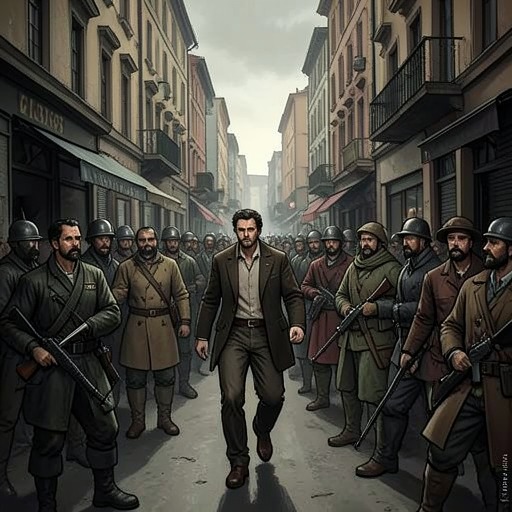
Shepherd—Taliban
The ShepherdThe Shepherd’s alliance with the Taliban turns a difficult-to-police border into a route for fighters and a supply line for his predation on children. He provides the movement’s guideship through mountain trails; in return, the Taliban provides young children for him to drain. The arrangement links the practical demands of cross-border movement to a private, monstrous appetite, without making the Shepherd merely another Taliban fighter.
A Guide Through the Borderlands
Niles explains that Taliban fighters move back and forth between Pakistan and Afghanistan through a maze of trails, valleys, and crevices that coalition troops cannot watch in full. The Shepherd’s value to the group lies in knowing those routes exceptionally well: he helps guide fighters across the border. The terrain makes his expertise consequential, turning local knowledge into a way around the limits of military surveillance.
The book presents the relationship as a transaction, not as evidence that the Shepherd belongs to the Taliban. Niles identifies the Shepherd as one of the Vampires and says he is the only one of his kind within a thousand miles. His connection to the Taliban is instead defined by what each side provides: he helps its fighters travel, and it supplies him with victims.
Payment in Children
The stated payment is not money or protection but young children. Niles says the Taliban keeps the Shepherd supplied with them, and that he bleeds them dry. The exchange makes the children’s vulnerability part of the operational arrangement: the group rewards a useful guide by furnishing the people he preys upon.
That bargain gives the alliance a particularly stark moral shape. The Taliban’s fighters benefit from the Shepherd’s knowledge of the border, while the Shepherd’s access to children depends on the group’s ability to supply them. The account does not describe how the children are selected or delivered, so the precise mechanics remain unstated; what it establishes is the deliberate exchange and its lethal consequence.
The Hunt Exposes the Arrangement
Lawson’s assignment begins with Niles describing the Shepherd as a target. Later, when Lawson is asked why he is tracking the man, the explanation again centers on what the Shepherd receives for guiding Taliban fighters from Pakistan into Afghanistan. This repetition keeps the relationship’s two sides in view: the border service explains why the Taliban uses him, while the children explain why Lawson considers him a target.
The pursuit unfolds in a landscape where crossing is possible far from obvious roads. Haydar leaves Lawson several miles from Afghanistan, pointing him toward an animal run and a cluster of rocks beyond the border, while warning that the vehicle would attract attention if brought closer. This is Lawson’s route, not a confirmed account of the Shepherd’s exact crossing point, but it makes concrete the kind of exposed, irregular terrain on which a guide’s knowledge has value.
The Shepherd’s Defense and the Conflict’s Stakes
When confronted, the Shepherd argues that killing the children is a favor because they are impoverished and have little to anticipate in life. His explanation invokes their deprivation, but it does not change the nature of the exchange: the Taliban supplies children, and he kills them. Lawson rejects the claim and frames his purpose as preventing further crimes against them.
The relationship therefore joins a real feature of the setting—the difficulty of monitoring movement across the border—to a distinct act of exploitation. The Taliban’s need for a knowledgeable guide helps explain the arrangement’s usefulness; the Shepherd’s appeal to poverty shows how he tries to rationalize its human cost. The narrative presents neither fact as absolution: the children remain the victims of a bargain made between armed guides and a predator.